Office: 518-432-0617
Sales Hours no sales hours
Address 45 Discovery Drive, Rensselaer, NY 12144
Fax: 518-432-9146
Sales Hours no sales hours
Address 45 Discovery Drive, Rensselaer, NY 12144
HomeBlogsVial Cap and Septa Regulations and Requirements for Laboratories
iStock-812936890

Laboratories, quality teams, and procurement professionals are responsible for selecting vial closures that protect sample integrity and support regulatory compliance. Understanding vial cap and septa requirements is essential when working across EPA methods, FDA expectations, and internal quality systems. This guide outlines how these standards influence closure selection, with a focus on performance, compatibility, and documentation.

Key Takeaways

  • EPA methods define performance expectations that directly impact vial closure performance in laboratory testing, particularly for VOC analysis
  • FDA and GMP frameworks evaluate closures as part of the full system, including container closure integrity requirements
  • Selecting the right cap and septa depends on method compatibility, material performance, and documented validation

Environmental Protection Agency (EPA)

Who must comply:

Environmental testing laboratories, contract labs, remediation firms, and organizations conducting environmental testing using EPA methods

An example EPA environmental method and its requirements:

EPA Method 5035: Closed-System Purge-And-Trap And Extraction For Volatile Organics In Soil And Waste Samples

1. Scope & Application

This method outlines a closed-system purge-and-trap technique for analyzing volatile organic compounds (VOCs) in solid materials such as soils, sediments, and solid waste. It is primarily used for low VOC concentrations but also includes procedures for high concentration samples and oily wastes. Sample collection and preparation follow defined procedures, and sample introduction uses the aqueous purge-and-trap procedure in Method 5030. These methods are compatible with multiple gas chromatographic procedures, including Methods 8015, 8021, and 8260.

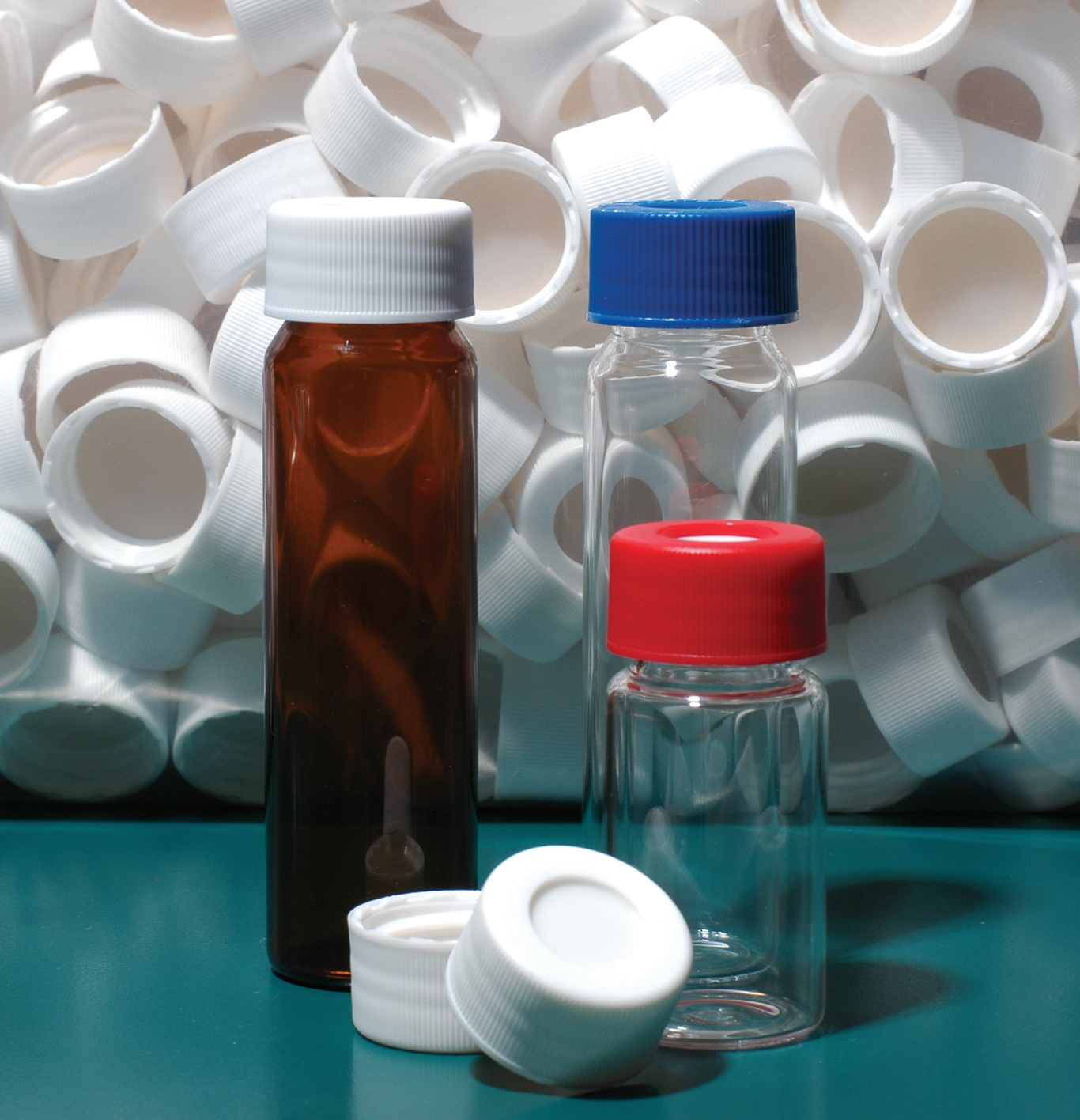
The low soil method relies on a hermetically sealed sample vial that remains sealed from collection through analysis. Closure performance can directly affect VOC retention, as it directly affects the ability to prevent VOC loss during transport and handling. ILT’s SURE Clean caps are designed with a protective overlay cap to help maintain sample cleanliness from the collection point through laboratory analysis.

Method 5035 is suitable for volatile organic compounds with boiling points below 200°C and low water solubility. It can include water-soluble compounds, though quantitation limits are typically higher due to reduced purging efficiency.

When paired with Method 8015 (GC/FID), Method 5035 supports analysis of aliphatic hydrocarbons such as gasoline fractions. For aromatic compounds like BTEX, Method 8021 (GC/PID) is commonly used. These methods can be used together for broader hydrocarbon analysis.

To prevent contamination of purge-and-trap systems, samples should be screened before analysis. Because sealed containers cannot be opened without compromising integrity, collecting multiple aliquots is recommended for screening and reanalysis.

2. Summary of Method

One approach involves collecting a bulk sample without preservative and preparing it in the laboratory using a water-miscible solvent. This process requires opening the container, which may lead to loss of volatile compounds.

A second approach involves collecting approximately 5 g of sample directly into a pre-weighed vial containing a water-miscible solvent such as methanol, sealed with a lined screw cap. ILT screw caps with bonded liners are commonly used in these workflows to support consistent sealing and sample protection during transport and analysis.

3. Interferences

Contamination may arise from purge gas impurities or organic compounds released from system components. Analytical systems should be verified using method blanks to ensure clean baseline conditions.

Materials used in the purge-and-trap system can contribute to background interference. Components that are not PTFE-based, including certain plastics, sealants, and rubber elements, may out-gas and affect results. Closure materials also play a role. Septa with PTFE-faced surfaces are commonly used to reduce bleed and minimize interference during analysis.

Laboratory environments must be controlled to prevent solvent contamination. Methylene chloride is a known source of background interference and should be isolated from analytical and storage areas.

4. Apparatus & Materials

Sample container requirements depend on the purge-and-trap system being used. In many cases, glass vials capable of holding at least 5 g of sample and 10 mL of liquid are required, along with screw caps fitted with PTFE-faced silicone septa.

System manufacturers may specify compatible vial and closure configurations. Selecting closures that align with method requirements is critical for maintaining seal integrity and consistent analytical performance. Typically, in the United States, a 40mL VOA vial is used with a 24mm open top cap lined with silicone/PTFE. ILT offers a full range of 24mm caps for VOA analysis.

5. Quality Control

Laboratories must demonstrate proficiency in both sample preparation and determinative methods, producing accurate and reproducible data for target analytes.

Additional quality assurance practices should be implemented based on sample type and laboratory protocols. This may include analysis of reference materials and participation in performance evaluation programs.


Food and Drug Administration (FDA)

Who must comply:

Food and drug manufacturers, contract manufacturing organizations, clinical and diagnostic laboratories, and packaging and QA teams responsible for food and drug product integrity.

According to the FDA, packaging materials that come into direct contact with food are classified as food contact substances and are regulated for safety. Oversight is provided by the Office of Food Additive Safety and the Center for Food Safety and Applied Nutrition.

The FDA also regulates packaging for pharmaceutical, clinical, and cosmetic applications, where closure systems must support product stability, safety, and consistency. These requirements influence material selection, compatibility testing, and quality assurance processes.

State of California Regulations

Who must comply:

Environmental laboratories, water testing facilities, manufacturers, and organizations selling or distributing regulated materials in California

California enforces stringent standards for environmental testing and material safety, often influencing requirements adopted in other states.

For water testing applications, low-level contaminant detection requires closure systems that minimize background interference.

California Safe Drinking Water Laws

California has established requirements for monitoring microplastics in drinking water, including standardized testing methods, reporting programs, and laboratory accreditation.

California Law on PFAS in Recyclables

California restricts the use of intentionally added PFAS in certain packaging materials and requires disclosure for cookware and related products. Additional regulations define when products can be labeled as recyclable based on PFAS content thresholds.

ISO Standards

Many laboratories operate under quality systems such as ISO 17025, which require validated methods, documented procedures, and traceable materials. While ISO standards do not define specific closure components, they reinforce consistency, documentation, and performance expectations within laboratory quality systems.

Final Checklist: Selecting Compliant Caps and Septa

Use this checklist to evaluate closure suitability across regulatory and laboratory requirements:

  • Confirm compatibility with applicable EPA methods and analytical procedures
  • Verify sealing performance to prevent sample loss or contamination
  • Review extractables, leachables, or bleed characteristics where relevant
  • Ensure materials are compatible with solvents, analytes, and storage conditions
  • Check supplier documentation, including lot-specific data where available
  • Align closure selection with internal QA and validation requirements
  • Confirm alignment with regulatory and laboratory vial cap and septa requirements

As a trusted U.S.-based supplier of vial caps designed for use in EPA method-based workflows, ILT provides the documentation, lot consistency, and technical support laboratories rely on to maintain sample integrity and meet regulatory expectations. Explore ILT’s full catalog to find the right fit for your application.

ILT Products & Regulations Comparison Table

Regulatory Standard/Requirement Regulatory Body/Scope Regulated Use Case Key Compliance Risks with Improper Closure Required Material Properties Recommended Cap/Septa
EPA Method 5035A EPA VOC analysis in soil using closed-system purge-and-trap VOC loss due to volatilization, permeation, sample contamination during transport Hermetic seal, very low permeation, minimal adsorption, chemical inertness 24mm open top screw cap with silicone/PTFE liner and 40mL VOA vials
EPA Method 8260D EPA GC/MS analysis of VOCs in environmental samples Analyte loss, septa bleed causing interference, contamination Low bleed, low outgassing, strong resealability after puncture 24mm open top screw cap with silicone/PTFE liner and 40mL VOA vials
EPA Method 524.2 EPA VOC analysis in drinking water via purge-and-trap GC/MS Headspace contamination, volatilization, carryover Ultra-low bleed, inert barrier layer, consistent seal compression 24mm open top screw cap with silicone/PTFE liner and 40mL VOA vials
EPA Method 8270E EPA SVOC analysis via GC/MS Adsorption of analytes, extract contamination, background interference Broad chemical resistance, low extractables, minimal adsorption 9mm bonded screw caps with PTFE/silicone liners
EPA Methods 537.1/533 EPA PFAS analysis in drinking water Background PFAS contamination from fluoropolymer components, false positives PFAS-free materials, low background interference, no PTFE where restricted PFAS-Free caps - polypropylene caps with silicone/polypropylene liners
USP <661>/<381> USP/FDA Container closure systems and elastomeric closures for pharmaceuticals Leachables/extractables, drug contamination, interaction with closure materials Low extractables, chemical stability, inert contact surfaces Various sized caps lined with silicone/PTFE or butyl/PTFE
FDA 21 CFR Part 211 FDA cGMP for pharmaceutical manufacturing and QC Contamination, seal failure, inconsistent packaging performance Validated materials, consistent seal integrity, reproducibility Various sized caps lined with silicone/PTFE or butyl/PTFE
ISO/IEC 17025 International (Lab Accreditation) General lab testing, calibration, and method validation Data variability due to inconsistent closures, poor reproducibility Consistent compression, low variability, low bleed/outgassing Various sized caps lined with silicone/PTFE or butyl/PTFE, including MS-certified caps and liners
ASTM D5191 ASTM Vapor pressure testing of petroleum products Leakage, pressure instability, loss of volatile components Pressure resistance, low permeability, durable septa 20mm crimp caps with silicone/PTFE liners
SPME (method-dependent, e.g., EPA 8260 with SPME) Industry standard/multi-method Solid Phase Microextraction sampling in GC/MS Fiber damage, coring, inconsistent sealing after puncture Low coring, high resealability, precision septa design 18mm and 20mm SPME Micro Center Liners for screw and crimp caps

As a trusted U.S.-based supplier of vial caps designed for use in EPA method-based workflows, ILT provides the documentation, lot consistency, and technical support laboratories rely on to maintain sample integrity and meet regulatory expectations. Explore ILT’s full catalog to find the right fit for your application.

Learn more about ILT, the world leader in manufacturing seals and septa.