Article by: Chrystal McDuffie
Lab and Technical Marketing Manager, ILT USA


Article by: Chrystal McDuffie
Lab and Technical Marketing Manager, ILT USA
Strong quality control does not start at the instrument. It starts with the components that touch the sample. Across environmental, pharmaceutical, food and beverage, and clinical laboratories, consumables and supplies play a direct role in data integrity, regulatory compliance, and operational efficiency. We asked ILT to share their perspective on what defines strong quality control today, where labs commonly go wrong, and how to select chromatography consumables that protect both performance and productivity.
Strong quality control begins with clarity and consistency in the lab supplies used for analytical testing. Labs need a reliable, consistent source of products to eliminate variability between suppliers. Selecting the right supplier from the outset reduces the risk of product-to-product variation that can impact analytical results.
Documentation and certification are equally important. Product certifications such as Certificates of Analysis, Certificates of Conformance, and Certificates of Compliance, depending on the product type, provide documented assurance that materials meet defined specifications. These certifications reflect a supplier’s commitment to quality and give laboratories confidence that their consumables will perform as expected.
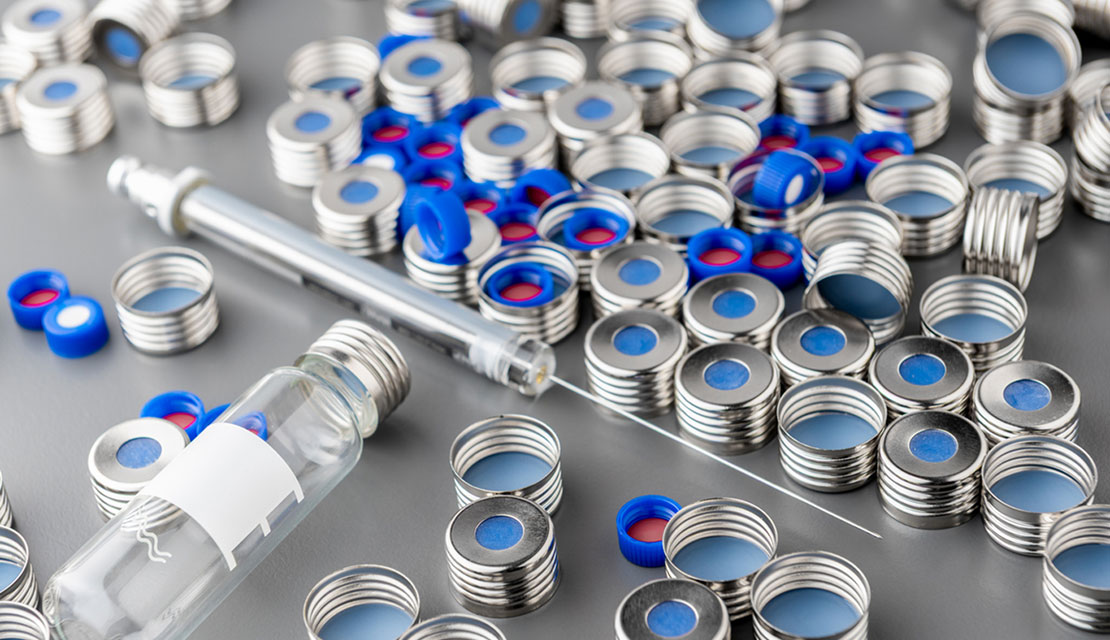
One common mistake is assuming all consumables are manufactured to the same quality standards. In chromatography, for example, the compatibility between the vial, cap, and septa is critical. Improper pairing or poor septa placement can lead to contamination, sample loss, or inconsistent sealing, directly affecting analytical results. Attention to septa material, cap design, and correct assembly is essential to maintaining sample integrity.
Another frequent issue is prioritizing the lowest upfront cost without considering total operational impact. Low quality consumables can contribute to instrument downtime, workflow interruptions, and reduced productivity. Instrument failures, sample loss, and rework often cost significantly more than the savings gained from purchasing lower priced supplies.
Using consumables that do not align with the analytical method is also a risk. For example, mass spectrometry applications often require low-bleed septa materials to minimize extractables and leachables. High temperature methods may require silicone rather than butyl septa. Selecting consumables based on method requirements is essential for optimal performance and reliable data.
The analytical method drives consumable selection. Headspace methods require specific vial sizes and compatible caps or crimps that properly fit the autosampler. Ensuring dimensional compatibility is critical for smooth instrument operation and consistent injection performance.
For mass spectrometry applications, low-bleed septa materials are recommended to minimize background interference from extractables and leachables. In food and beverage testing, where trace analysis and regulatory compliance are often required, minimizing contamination sources is especially important.

Start with supplier credibility. A reputable manufacturer with a well established brand, strong technical support, and transparent quality documentation reduces risk. Look for suppliers that provide detailed technical specifications, validated testing data, and accessible guidance for product selection.
Beyond brand reputation, evaluate consistency in manufacturing, available certifications, method compatibility guidance, and responsive customer support. Reliable consumables should support your workflow, not introduce variability or uncertainty.
ILT recommends referencing the technical guide section on our website:
ILT follows a rigorous New Product Development Lifecycle process. Each project establishes defined release criteria at the outset, and products must meet or exceed those criteria before launch.
Testing requirements vary by project, but all include assessments of fit, form, and function, as well as verification that critical-to-quality factors in the product design meet established criteria prior to release.

Regulatory and sustainability requirements continue to evolve.
The European Union’s REACH framework includes a Substances of Very High Concern list that is updated regularly. The list currently contains 288 substances and is typically revised at least once per year, sometimes twice. Laboratories and suppliers must stay informed about updates that could affect raw materials or finished products.
Sustainability is also influencing industry practices. From responsible raw material sourcing to recycling initiatives and internal operational policies, environmental considerations are shaping procurement decisions and product development across the laboratory supply sector.