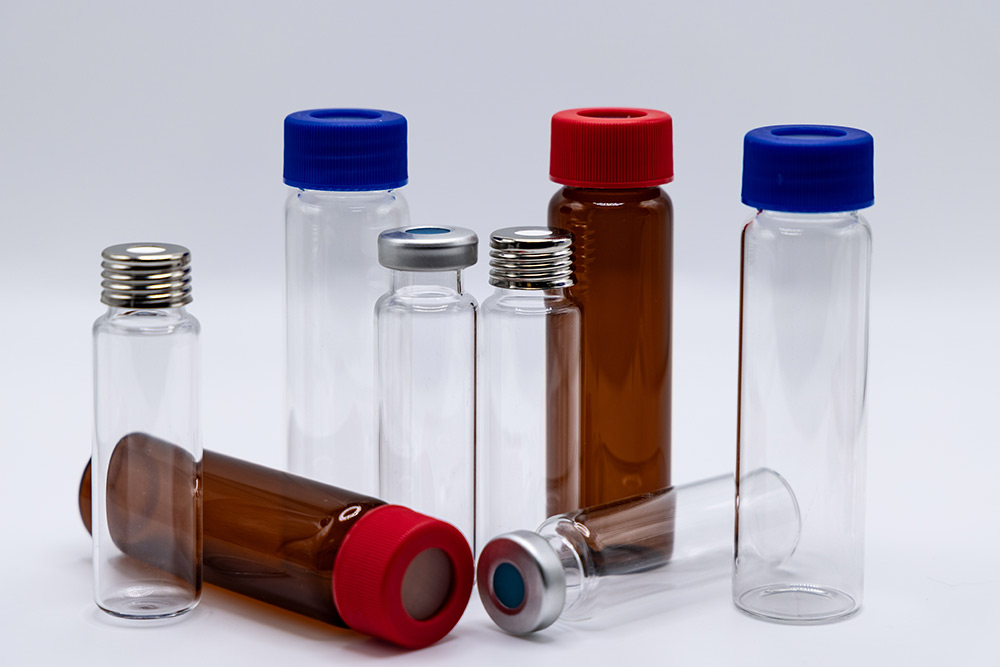
Chemical compatibility can also affect results. Solvents and sample matrices can interact differently with closure materials, and some materials may interact with analytes through adsorption or absorption. Those interactions can affect the amount of an analyte that ultimately reaches the instrument. Selecting a closure requires consideration of the sample chemistry, not simply the dimensions of the vial.
The seal itself can affect sample composition. If a closure does not maintain an appropriate seal, volatile compounds may escape during storage or before injection. Changes in sample concentration can then affect the resulting analysis. Storage conditions, handling, and the amount of time a sample spends in the vial can all influence how important this becomes.
Contamination presents another concern. Closure materials can introduce unwanted compounds into a sample, making extractables and leachables a key consideration when selecting caps and septa. The materials used in the cap and septum therefore matter, particularly when an analytical method requires high sensitivity.
The septum also has to withstand the physical demands of autosampling. Repeated needle punctures can cause coring and generate particles that may enter the sample. Meanwhile, the cap, septum, and vial need to work together to maintain a consistent seal and prevent leakage.
Taken together, these considerations illustrate why vials, caps, and septa should be selected based on the analytical application. A closure that fits a vial may not provide the material compatibility, sealing performance, or septum performance that a particular GC-MS method requires.