Article by: Chrystal McDuffie
Lab and Technical Marketing Manager, ILT USA


Article by: Chrystal McDuffie
Lab and Technical Marketing Manager, ILT USA
EPA Method 8260 establishes strict requirements for the analysis of volatile organic compounds (VOCs), where even minor contamination or sample loss can significantly affect results. In environmental laboratories, closures function as a critical control point affecting analytical consistency and data quality. ILT provided insight into the engineering considerations behind cap and liner design and how these components support reliable performance in VOC testing environments.
ILT’s 24 mm environmental caps and liners are low-bleed components, with each production lot tested against the EPA 8260 VOA compound list using a purge-and-trap GC/MS method. This lot-specific testing approach helps verify performance and consistency for VOC analysis.
ILT also offers SURE-Clean™ 24 mm snap cap dust covers, a one-piece cap design with a removable snap-top dust cover. This configuration is designed to reduce chemical and particulate contamination during sample collection, transportation, storage, and analysis.
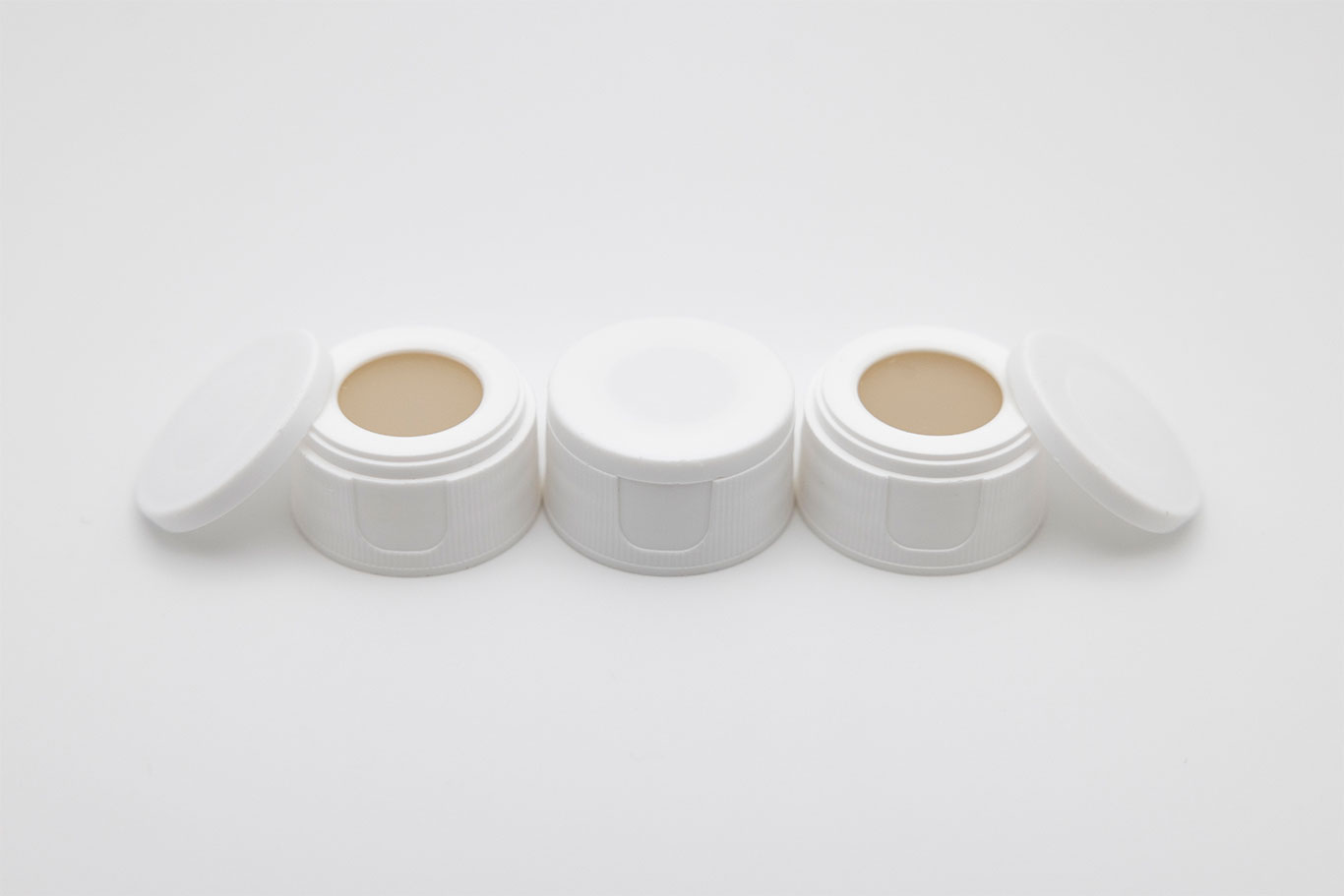
Using multiple caps throughout the workflow can introduce variability, as samples are often recapped during collection, storage, and analysis. Each cap change creates an opportunity for contamination or sample disturbance.
Maintaining zero-bubble collection is also critical. Preserving sample integrity from collection through analysis depends on preventing headspace formation, which closures must support consistently across each stage of the process.
ILT’s SURE-Clean™ cap design as a key solution. This one-piece cap features a removable snap-top dust cover, designed to help reduce chemical and particulate contamination during sample collection, transportation, storage, and analysis.
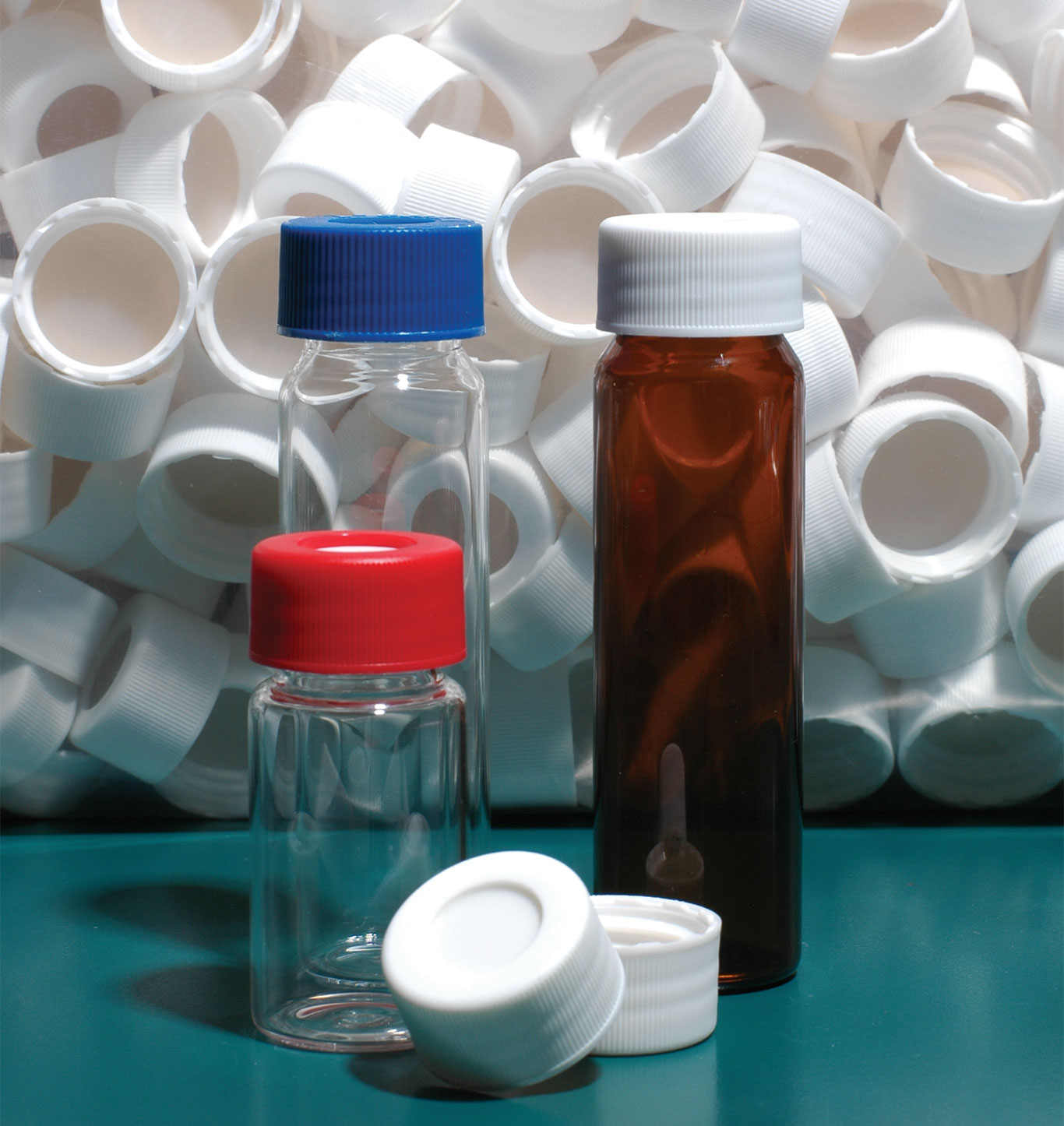
ILT recommends low-bleed silicone/PTFE liners for VOC analysis.
Key performance characteristics include low-bleed properties for GC/MS applications and a tight, reliable seal, which depends on selecting the correct liner thickness.

Environmental testing standards define how samples must be collected, preserved, and analyzed across the full workflow, from field collection through laboratory instrumentation. These methods establish the operational requirements that testing components must meet to maintain valid results. The following table summarizes key environmental testing standards, what they govern, and the primary industries where they are applied.
| Standard/Method | What It Governs | Primary Use Case | Industries/Applications |
|---|---|---|---|
| EPA Method 8260 (GC/MS VOCs) | Analysis of volatile organic compounds in various matrices | Identification and quantification of VOCs in water, soil, and waste samples | Environmental laboratories, remediation, industrial compliance testing, petrochemical monitoring |
| EPA Method 5035 | Collection and preservation of soil samples for VOC analysis | Prevents VOC loss during soil sampling through sealed, pre-preserved containers | Environmental consulting, contaminated land assessment, Superfund sites |
| EPA Method 524.2 | VOCs in drinking water using purge-and-trap GC/MS | Detection of trace VOCs in potable water systems | Municipal water utilities, public health labs, regulatory compliance agencies |
| EPA Method 624.1 | Volatile organics in wastewater and effluent | Monitoring industrial discharge and wastewater treatment output | Wastewater treatment facilities, manufacturing, environmental compliance |
| EPA SW-846 Methods (e.g., 8260 series) | Hazardous waste characterization | Identification of VOCs in solid and liquid waste streams | Hazardous waste management, landfill monitoring, environmental remediation |
| ISO/IEC 17025 | Laboratory competence and quality management | Ensures reproducibility, traceability, and validated lab processes | Accredited analytical laboratories across environmental, chemical, and industrial sectors |
| ASTM D5790 / VOC sampling guidance | General VOC sampling and handling practices | Standardized sampling procedures for environmental matrices | Environmental consulting, field sampling services, regulatory contractors |